People Counting and Visitor Analytics for Museums and Galleries
CountPort turns the overhead cameras a museum or gallery already owns into anonymous visitor numbers, gallery dwell figures and room occupancy, ready for daily operations and funder reporting.
Works with the cameras you already have · Anonymous · Video stays on-site
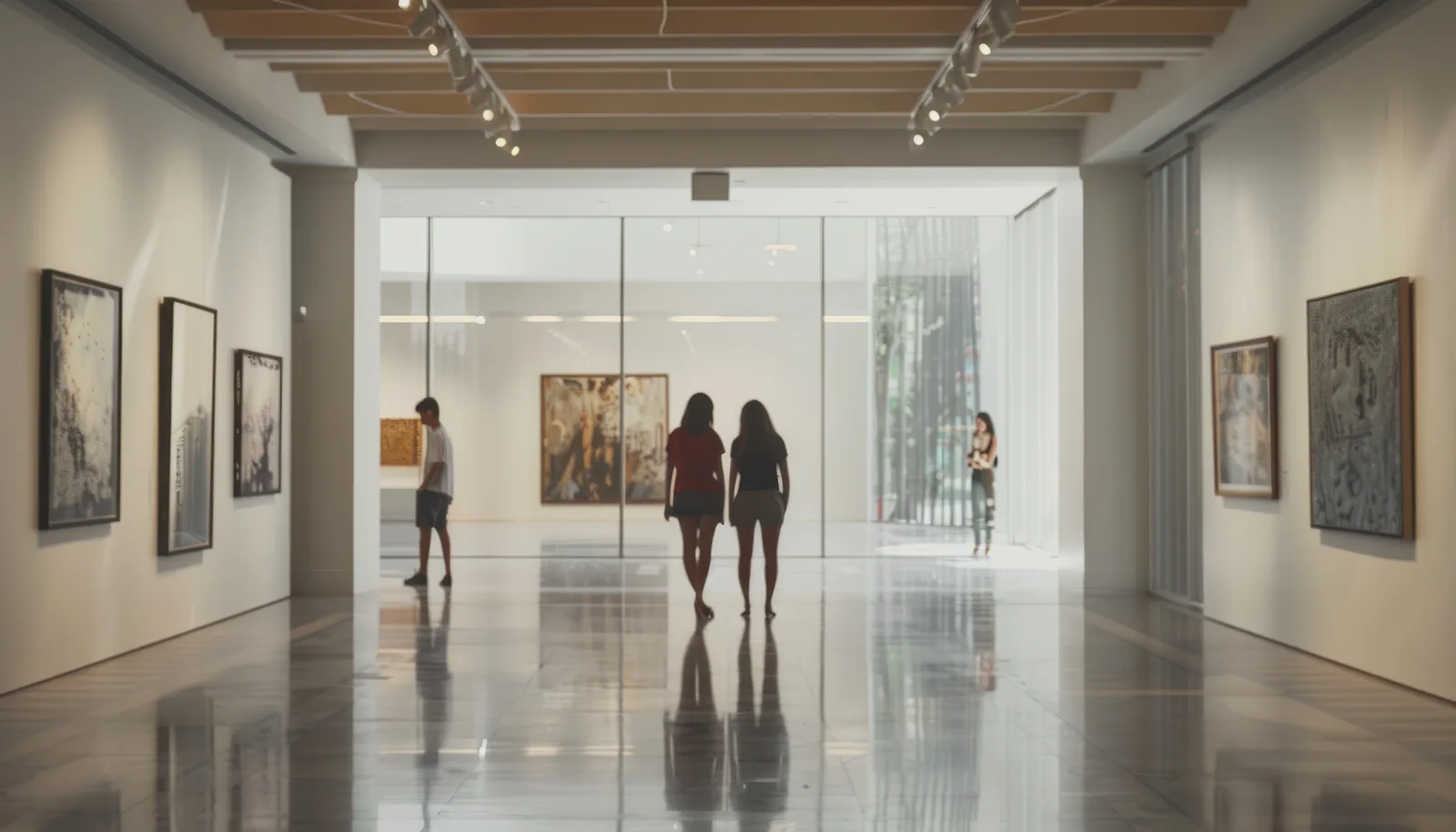
Visitor measurement built for cultural venues
Museums and galleries are measured by who comes through the door and what they see once inside. People counting for museums and galleries gives a cultural venue a steady record of visitor numbers, gallery footfall and how long people spend in each room, drawn from cameras that are already installed. CountPort reports figures, not identities, so the measurement fits a public-facing building.
Many venues still reconcile attendance from till receipts, free-entry estimates and the occasional manual clicker. Those methods miss returning visitors, school groups and quiet weekday afternoons. CountPort counts everyone who enters and leaves, separates adults from children and counts groups as the correct number of people, which gives admissions reconciliation a consistent baseline.
The same numbers serve two audiences at once. Front-of-house staff use live occupancy to manage busy galleries, while directors and grant officers use the daily and exhibition totals for board papers and funder reports. Because video is processed inside the building and never leaves it, a museum can measure visitors without holding footage of them.
What museums & galleries operators want to know.
Admissions never match the door
Free entry, members, school visits and event passes mean ticket sales rarely equal the people inside. Without a count at the entrance, attendance figures are estimates that are hard to defend to a board or a funder.
No record of what each gallery draws
A venue often knows its total visitor number but not how that splits across rooms. Which exhibition pulled a crowd, and which gallery was quietly passed through, is usually a matter of staff impression rather than measurement.
Room limits are hard to hold
Fragile works, small temporary galleries and special exhibitions carry occupancy limits for conservation and safety. Knowing in real time how many people are in a room, before it becomes uncomfortable, is difficult with manual checks alone.
Reporting season is a manual scramble
Annual reviews, accreditation and grant applications ask for peak periods, attendance trends and exhibition performance. Assembling those numbers by hand from several sources is slow and leaves gaps that weaken the case for funding.
CountPort analytics, applied to museums & galleries.
Each measure runs on the overhead cameras you already have. Video is processed on-site and stays anonymous.
Reconcile attendance against the door
CountPort counts every visitor entering and leaving, including free-entry and group arrivals, and counts couples and families as the right number of people. That gives admissions reconciliation a single anonymous figure to check ticketing and estimates against.
Counting ›Hold room and gallery occupancy limits
Live occupancy shows how many people are inside a gallery or the whole building at once, with capacity limits and alerts. Staff can manage flow into a fragile-works room or a busy temporary exhibition before it gets too full.
Occupancy ›See which works hold attention
Heatmaps show where visitors slow down and gather on the gallery floor. A curator can see which displays draw a crowd and which corners are passed over, informing layout, signage and the placement of key pieces.
Heatmaps ›Measure dwell by exhibit and route
Zones and routes report the performance of specific galleries and the paths visitors take between them. This turns gallery dwell and circulation into figures a venue can compare across exhibitions and seasons.
Zones & routes ›Shorten waits at the entrance and desk
Queue analytics measure queue length, wait time and abandonment at the ticket desk, cloakroom or timed-entry point. A venue can adjust staffing at busy times so arrival does not become the worst part of the visit.
Queue ›Keep staff and guides out of the count
Staff exclusion keeps invigilators, guides and back-of-house movement out of the visitor numbers, so attendance and gallery footfall reflect the public rather than people who work there.
Staff exclusion ›How CountPort works inside a museum or gallery
CountPort runs on the standard overhead cameras most cultural venues already have at entrances, in galleries and around service points. A small computer inside the building reads those feeds and produces counts, occupancy and movement figures. No new cameras or turnstiles are needed, which suits historic buildings where fixtures are restricted and new hardware is hard to install.
At the entrance, counting records arrivals and departures so the venue has a defensible visitor total for each day, week and exhibition. Inside, zones and routes and heatmaps describe how people move through the galleries and where they linger. At the desk and cloakroom, queue analytics show where waits build up.
Results appear on a live dashboard for front-of-house and operations staff, with scheduled exports and a data connection for the figures that feed board reports, accreditation returns and funder applications. The same measurement serves the gallery floor on the day and the reporting cycle at the end of the year.
Anonymous measurement on a public site
A museum holds a duty of care to its visitors, and surveillance of named individuals would sit badly against that. CountPort is built to count without identifying. It does not use facial recognition and does not recognise individuals. All video is processed on the small on-site computer, the footage never leaves the building, and only the resulting numbers reach the dashboard.
What a venue receives is anonymous figures: how many entered, how many are inside, how long a gallery held attention, how the visitor mix and visit patterns shift over time. Visitor profiles describe that anonymous mix, never an identity. This lets a cultural institution measure visitors and report attendance honestly while keeping a public space free of personal tracking.
Reporting for funders, boards and accreditation
Public museums and galleries answer to several bodies at once: trustees, local authorities, grant-makers and accreditation schemes. Each wants attendance trends, peak periods and evidence that programming reaches an audience. CountPort builds those numbers steadily through the year so that reporting season is a matter of exporting rather than reconstructing.
Exhibition reporting becomes concrete. A venue can show the visitor numbers a temporary show drew, how gallery dwell compared with the permanent collection, and which weeks and hours were busiest. Pricing is published and flat per camera, with Lite at $29 per camera per month and Pro at $39 per camera per month, so a venue can budget the measurement against the cameras it already runs.
The numbers worth watching.
Daily visitor numbers
A consistent anonymous count of people entering and leaving, giving attendance a baseline to reconcile against tickets.
Live room occupancy
How many people are inside a gallery or the building now, against the capacity limit set for it.
Gallery dwell time
How long visitors spend in each room, showing which exhibits hold attention and which are passed through.
Exhibition footfall
Visitor numbers for a temporary show, ready to compare against the permanent collection and past exhibitions.
Peak-hour profile
The busiest hours and days across a week, used to plan invigilation, staffing and timed entry.
Queue wait at the desk
Length, wait time and abandonment at ticketing or cloakroom, so arrival waits can be managed at peak.
CountPort measures people anonymously. It counts and groups visitors, never identities, and does not use facial recognition. All video is processed on-site, inside your premises, and is never uploaded; only the measurements you choose to keep are shared. This approach reduces privacy risk and simplifies data-protection review. Read privacy details ›
Explore other industries
All industries ›
Libraries & Public Buildings
CountPort turns the overhead cameras a library or civic building already runs into anonymous visitor counts, zone usage and live occupancy. The video stays on-site, and only the numbers reach the dashboard.
View ›
Fashion & Apparel
CountPort measures footfall, conversion and floor behaviour in clothing stores and boutiques using the overhead cameras already installed, with all video processed on-site and no facial recognition.
View ›
Grocery & Supermarkets
CountPort turns the overhead cameras a grocery store already runs into footfall, queue and aisle analytics. Video is processed on-site, and only anonymous numbers reach the dashboard.
View ›Questions about CountPort for museums & galleries.
Does CountPort use facial recognition to count museum visitors?
No. CountPort does not use facial recognition and does not identify individuals. It counts people anonymously from overhead cameras. Video is processed on a small computer inside the building, the footage never leaves the premises, and only the resulting numbers reach the dashboard.
Can it count visitors when entry is free or unticketed?
Yes. Counting works at the entrance regardless of ticketing, so free-entry galleries and unticketed museums still get a full visitor number. This is useful for admissions reconciliation, since the count covers members, school groups and event guests that tickets miss.
Will it count school groups and families correctly?
CountPort counts groups as the correct number of people, so a family or a school party is recorded as the number of individuals who entered. It also classifies adults and children, which helps a venue understand the make-up of its audience without identifying anyone.
Can CountPort help enforce room occupancy limits for fragile works?
Occupancy analytics show how many people are inside a gallery or the whole building at one time, with capacity limits and alerts. Staff can see when a room is approaching its limit and manage entry, which supports conservation and safety in small or sensitive spaces.
Do we need to install new cameras or turnstiles?
No. CountPort runs on the standard overhead cameras a venue already owns, which suits historic buildings where new fixtures are restricted. A small on-site computer reads the existing feeds and produces the figures, with no turnstiles required.
How does CountPort support funder and accreditation reporting?
Figures build up daily and by exhibition, and reach a live dashboard plus scheduled exports. A venue can report attendance trends, peak periods and exhibition footfall for boards, grant applications and accreditation without assembling numbers by hand from separate sources.
Measure visitors without watching them
Request a demo to see anonymous visitor counting and gallery occupancy on your existing cameras, or view pricing for flat per-camera plans.