People counting and footfall analytics for convenience stores and pharmacies
CountPort turns the overhead cameras a small store already runs into anonymous footfall, queue and occupancy data. Video is processed on-site, and only numbers reach the dashboard.
Works with the cameras you already have · Anonymous · Video stays on-site
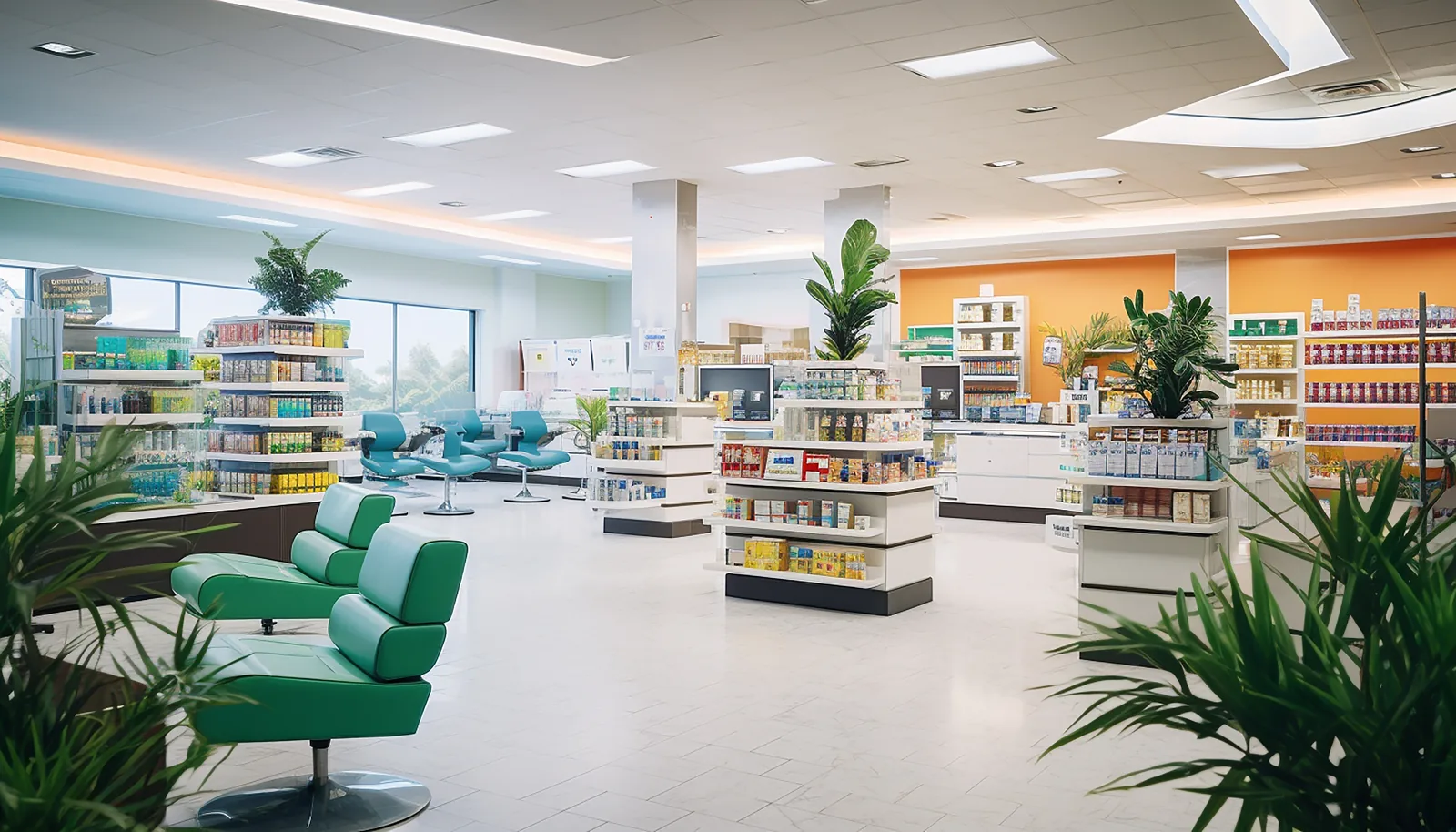
Footfall and queue data sized for small-footprint stores
Convenience stores and pharmacies run on a small floor, a single counter and long opening hours, often with one member of staff covering the whole site. CountPort provides people counting for convenience stores and pharmacies using the overhead cameras already installed, so footfall analytics, till queue length and occupancy become visible numbers rather than guesswork from till receipts.
Every figure is anonymous. Camera feeds are processed on a small computer inside the premises, the video never leaves the building, and only counts and timings are sent to the dashboard. CountPort does not use facial recognition and does not identify anyone. The result is a clear record of how many people enter, when peaks occur, and how queues behave at the counter.
Because the software reads existing cameras, a convenience store or pharmacy can begin measuring visitor numbers, peak times and dwell at promotions without new hardware on the shop floor. Counts and timings update on a live dashboard, with scheduled exports for weekly review or for feeding into existing reporting.
What convenience & pharmacy operators want to know.
One counter, fast peaks
A convenience store or pharmacy usually has a single till. When two or three customers arrive together, a queue forms quickly. Without measurement, it is hard to know how often the counter is under pressure or for how long.
Single-staff coverage
Many small stores run with one person on shift. That person cannot watch the door, serve the counter and judge how busy the day was at the same time. Footfall and queue numbers fill that gap after the fact.
Knowing the real peak times
Till data shows when sales happen, not when people walk in without buying. Counting everyone who enters reveals true peak times, including browsers and prescription waits that never reach the register.
Dwell around promotions
Small stores rely on end-caps, fridge fronts and pharmacy counters to drive sales. Without floor data it is unclear whether a promotion holds attention or whether people pass it without slowing down.
CountPort analytics, applied to convenience & pharmacy.
Each measure runs on the overhead cameras you already have. Video is processed on-site and stays anonymous.
Count everyone who walks in, not just buyers
CountPort counts people entering and leaving from overhead cameras, with adult and child classification and group counting so a family is recorded as the correct number of people. This gives a true footfall figure to compare against sales.
Counting ›See queues build at the counter
Queue analytics measure line length, wait time and abandonment at the till or pharmacy counter, so a store can see how often customers wait and whether anyone leaves before being served.
Queue ›Track occupancy in a small space
Occupancy analytics show how many people are inside at one time, with capacity limits and alerts. For a compact store, this helps judge comfortable density and staff a busy spell before it overflows.
Occupancy ›Find your real peak times
Visitor profiles describe the anonymous visitor mix and visit patterns over time, never identity. A pharmacy can see which hours and days draw the most people and plan shift cover around them.
Visitor profiles ›Measure dwell at promotions
Heatmaps show where people move, slow down and gather on the floor. A convenience store can check whether an end-cap or fridge front holds attention or whether shoppers walk straight past it.
Heatmaps ›Keep staff out of the numbers
Staff exclusion keeps employees out of the visitor counts. In a single-staff store this matters, because one person moving in and out of view could otherwise distort the footfall figure for the whole day.
Staff exclusion ›How CountPort works in a convenience store or pharmacy
CountPort runs on the standard overhead cameras a store already owns. A small computer inside the premises reads those feeds and produces counts and timings: people entering and leaving, occupancy at any moment, queue length and wait time at the counter, and the paths shoppers take across a compact floor.
The numbers appear on a live dashboard and can be sent out as scheduled exports or a data connection into existing reporting. For a small store this means no new sensors above the door and no separate hardware to maintain, only the cameras already in place.
Because the floor is small, a few well-placed cameras typically cover the entrance, the counter and the main aisles. Zones and routes can then report on specific areas, such as the prescription counter or a promotional display, and the routes people take between them.
Anonymous by design, processed on-site
Privacy is built into how CountPort operates. All video is processed on the small on-site computer, the footage never leaves the building, and only the resulting numbers are reported to the dashboard. There is no facial recognition and no attempt to identify any individual customer or member of staff.
This matters in pharmacy settings, where customers may be collecting prescriptions or asking about health products and reasonably expect discretion. CountPort records how many people are present and how long they wait, not who they are. Adult and child classification and group counting describe the visitor mix anonymously, never a person.
For a store owner, the practical effect is honest footfall and queue data without the obligations that come with identifying people. The cameras keep doing their existing job, and CountPort reads them only to produce anonymous counts and timings.
Getting started and what it costs
Getting started begins with the cameras already covering the entrance and counter. CountPort is installed on a small on-site computer, configured to count at the door and time queues at the till, and then reports to the dashboard. There is no shop-floor hardware to add and no change to how the store serves customers.
Pricing is published and flat per camera. Lite is 29 dollars per camera per month and Pro is 39 dollars per camera per month, so a small store with a handful of cameras can estimate the cost before committing. To see the platform against a real store layout, request a demo, or view pricing for the full per-camera detail.
The numbers worth watching.
Footfall (entries)
Total people entering, counted from overhead cameras, giving a true measure of demand beyond till receipts.
Queue wait time
How long customers wait at the counter before being served, measured separately from service time.
Queue abandonment
How often someone joins the line at the till but leaves before reaching the counter.
Peak occupancy
The highest number of people inside at one time, useful for judging comfortable density in a small space.
Conversion rate
Counted entries compared with transactions, showing how many visitors leave without buying.
Promotion dwell
Where shoppers slow down and gather on the floor, from heatmaps, around end-caps and pharmacy displays.
CountPort measures people anonymously. It counts and groups visitors, never identities, and does not use facial recognition. All video is processed on-site, inside your premises, and is never uploaded; only the measurements you choose to keep are shared. This approach reduces privacy risk and simplifies data-protection review. Read privacy details ›
Explore other industries
All industries ›
Fashion & Apparel
CountPort measures footfall, conversion and floor behaviour in clothing stores and boutiques using the overhead cameras already installed, with all video processed on-site and no facial recognition.
View ›
Grocery & Supermarkets
CountPort turns the overhead cameras a grocery store already runs into footfall, queue and aisle analytics. Video is processed on-site, and only anonymous numbers reach the dashboard.
View ›
Electronics & Big-Box
CountPort turns the overhead cameras already installed in an electronics or big-box store into anonymous footfall and behaviour analytics, measuring how departments fill, where demo stations draw attention and how many big-ticket visits reach a counter.
View ›Questions about CountPort for convenience & pharmacy.
Does CountPort use facial recognition in a pharmacy?
No. CountPort does not use facial recognition and does not identify individuals. All video is processed on a small computer inside the premises, the footage never leaves the building, and only anonymous counts and timings are sent to the dashboard.
Do I need to buy new hardware for a small store?
No new shop-floor sensors are required. CountPort runs on the standard overhead cameras already installed. A small on-site computer reads those feeds and produces the counts, so the cameras keep doing their existing job.
Will the count include my staff?
Staff exclusion keeps employees out of the visitor numbers. This is helpful in single-staff stores, where one person moving in and out of camera view could otherwise distort the footfall figure across a long shift.
Can CountPort measure the queue at one till?
Yes. Queue analytics measure line length, wait time and abandonment at a service point such as the till or pharmacy counter, so a store can see how often customers wait and whether anyone leaves before being served.
How are families and couples counted?
CountPort counts people entering and leaving with group counting, so a couple or family is recorded as the correct number of people rather than as one visitor. Adult and child classification describes the visitor mix anonymously.
What does it cost for a convenience store?
Pricing is published and flat per camera. Lite is 29 dollars per camera per month and Pro is 39 dollars per camera per month. A small store with a few cameras can estimate the monthly cost directly from that rate.
See footfall and queue data on your own store cameras
Request a demo to see CountPort against a convenience store or pharmacy layout, or view pricing for the flat per-camera rate.