People counting and showroom analytics for car dealerships
CountPort turns the overhead cameras already in a dealership showroom into anonymous footfall and behaviour analytics. It measures how many people visit, which models draw attention and how showroom traffic converts into test drives.
Works with the cameras you already have · Anonymous · Video stays on-site
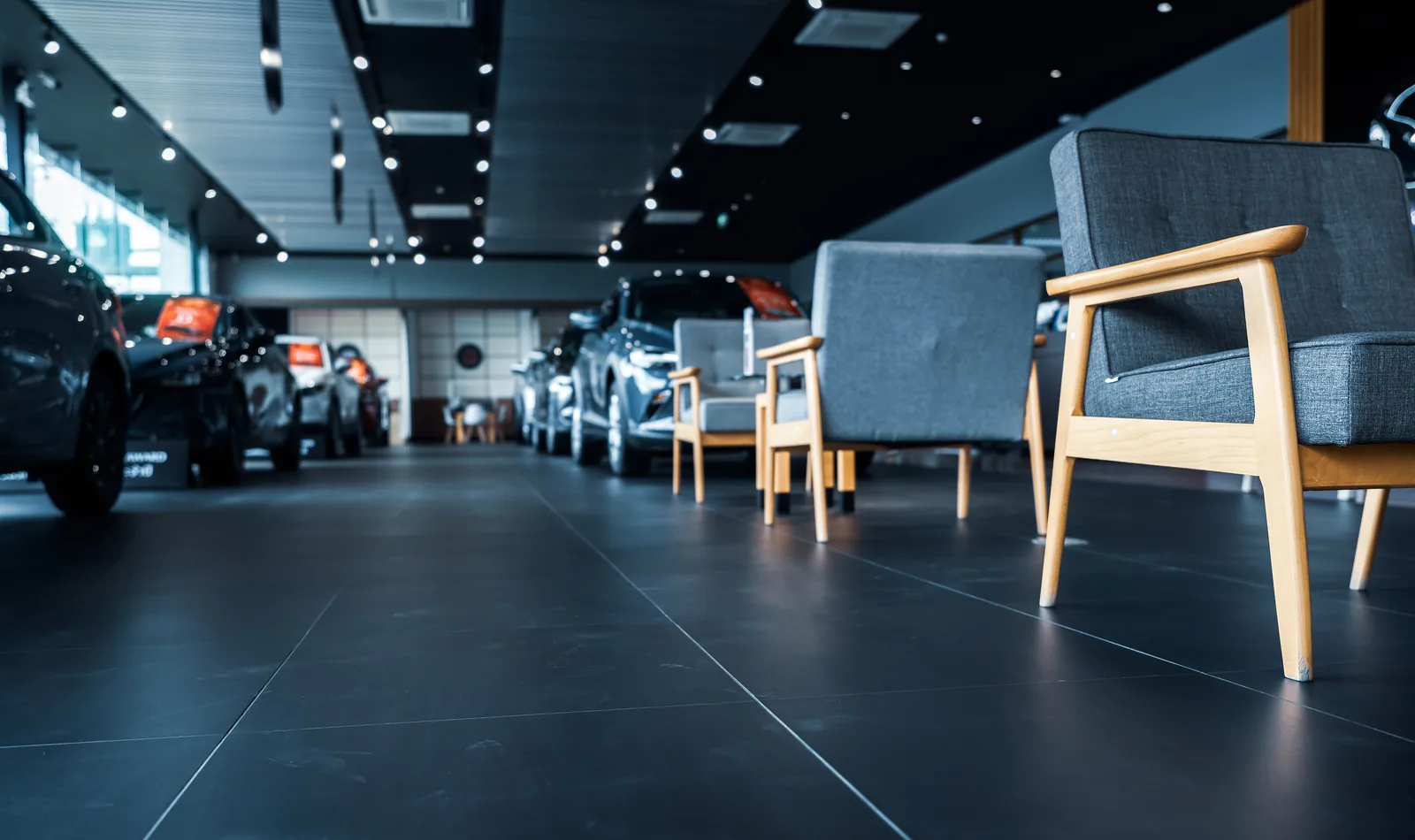
Measure showroom demand without guesswork
People counting for car dealerships answers a question most showrooms cannot reliably answer: how many people actually walked in, and what did they do once inside. CountPort reads the standard overhead cameras a dealership already owns and reports anonymous showroom footfall, model and zone interest, and the share of visitors who go on to take a test drive. No new hardware is required, and no individual is ever identified.
Sales teams often judge a slow week by the number of deals signed, but the deal sheet starts halfway through the journey. Showroom footfall analytics put a number on the top of the funnel — the visitors who browse, linger by a model and leave without speaking to anyone. With counting, occupancy and zone data on one dashboard, a dealership can separate a traffic problem from a coverage or conversion problem and act on the right one.
Because all video is processed on a small computer inside the dealership and only the resulting numbers leave the building, CountPort gives general managers and group reporting teams trustworthy visitor data without storing faces or recordings. The result is car dealership visitor analytics that staff, customers and head office can all be comfortable with.
What automotive dealerships operators want to know.
Showroom footfall is rarely counted
Most dealerships record appointments and deals but not the people who simply walk the floor. Without a reliable count of showroom traffic, conversion rates and per-visit value are estimates rather than measured numbers, and slow days are hard to explain.
Browsers leave before anyone speaks to them
A visitor can study a model for several minutes and walk out unattended during a busy spell. Dealerships need to know when showroom traffic outruns salesperson coverage, and which times of day the floor is left thin against demand.
Model and zone interest is invisible
It is hard to know which vehicles on the floor draw real attention and which are passed by. Without behaviour data, model placement, demo positioning and showroom layout decisions rest on opinion rather than observed visitor movement.
Weekend and after-hours demand is a blind spot
Weekends and the windows after the showroom closes carry interest that never appears in the appointment book. Counting people at the glass and on the floor turns that latent demand into a figure managers can plan and staff around.
CountPort analytics, applied to automotive dealerships.
Each measure runs on the overhead cameras you already have. Video is processed on-site and stays anonymous.
Count every showroom visitor accurately
CountPort counts people entering and leaving the showroom from overhead cameras, classifies adults and children and counts couples and families as the correct number of people. That gives a dependable footfall baseline for conversion and per-visit reporting.
Counting ›Measure test-drive conversion from real traffic
With showroom footfall counted at the door and zones marked around the test-drive desk or vehicle handover area, a dealership can compare visitors against test drives taken and track how that conversion moves week to week.
Zones & routes ›See which models and zones draw attention
Floor heatmaps show where visitors slow down, gather and dwell. Managers can see which vehicles, displays and corners of the showroom hold interest, and use that evidence to position high-margin models and demo units.
Heatmaps ›Match salesperson coverage to live demand
Live occupancy shows how many people are on the showroom floor at any moment, with capacity-style alerts when numbers climb. Sales managers can move staff onto the floor before browsers leave unattended during weekend peaks.
Occupancy ›Keep staff out of the visitor numbers
Staff exclusion separates the sales team, service advisors and porters from genuine showroom visitors, so footfall and conversion figures reflect customers rather than the people working the floor.
Staff exclusion ›Understand weekend and visit patterns over time
Anonymous visitor profiles describe the showroom's visitor mix and how traffic patterns shift across weekdays, weekends and seasons — never identity. That supports rostering, opening hours and campaign timing decisions.
Visitor profiles ›How CountPort works in a dealership showroom
CountPort connects to the overhead cameras already installed across a dealership — typically the wide-angle units covering the main entrance, the showroom floor and the customer waiting and handover areas. The software reads those feeds and reports anonymous numbers: people in and out, how many are inside, where they move and how long they dwell near specific vehicles. There is no new camera to buy and no rewiring of the showroom.
A small computer inside the dealership does all the processing. Video stays on that machine and never leaves the premises; only counts, occupancy figures, heatmaps and zone metrics are sent to the dashboard. For a showroom that displays expensive stock and welcomes families, this keeps the analytics firmly on the side of measurement rather than surveillance.
From there, managers read the data live on a dashboard or receive scheduled exports. Group operators can pull the same figures from every rooftop into one report, comparing showroom footfall, test-drive conversion and salesperson coverage across locations on a consistent basis.
Privacy on the cameras you already own
CountPort does not use facial recognition and does not identify anyone who walks into the showroom. It counts and analyses anonymous movement, so a family browsing a hatchback on a Saturday is recorded only as the right number of people and a path across the floor — not as identities to be stored or matched.
Because processing happens on-site and the footage never leaves the building, a dealership is not creating a new archive of customer faces or a database that travels to a third party. The numbers that reach the dashboard describe behaviour, not people. This makes showroom footfall analytics straightforward to explain to staff, to customers who ask, and to a group's own data and compliance reviewers.
Staff exclusion is the only person-level filter CountPort applies, and it works on movement patterns rather than identity. CountPort does not claim to recognise the same visitor across different cameras, and it does not de-duplicate people across the site — the counting it reports is honest about what it measures.
Getting started and reporting
A dealership can begin with the cameras covering the showroom entrance and floor, then add zones around the test-drive desk, finance offices or service reception as questions grow. Counting and occupancy give an immediate footfall and capacity baseline; heatmaps and zones build the behavioural picture of model interest and floor coverage over the following weeks.
Pricing is published and flat per camera, so a dealership can size a deployment to the number of cameras it wants to read: CountPort Lite is 29 dollars per camera per month and Pro is 39 dollars per camera per month. There are no per-visitor fees and no bespoke quote to chase before seeing the cost.
To see showroom footfall analytics running on a dealership's own cameras, request a demo, or view pricing to plan a rollout across one rooftop or a whole group. CountPort reports through a live dashboard plus scheduled exports, so the figures can feed straight into existing weekly sales and traffic reviews.
The numbers worth watching.
Showroom footfall
The number of people entering the showroom, the top-of-funnel figure most dealerships never measure reliably.
Test-drive conversion
Visitors who go on to take a test drive, comparing counted footfall against activity in the test-drive zone.
Live showroom occupancy
How many people are on the floor at once, so coverage can be matched to demand during peaks.
Model and zone interest
Where visitors dwell and gather, showing which vehicles and showroom areas hold real attention.
Weekend traffic share
How much of the week's showroom traffic lands at weekends, to guide rostering and opening hours.
After-hours window interest
Attention captured at the glass and entrance outside opening hours, surfacing demand the diary misses.
CountPort measures people anonymously. It counts and groups visitors, never identities, and does not use facial recognition. All video is processed on-site, inside your premises, and is never uploaded; only the measurements you choose to keep are shared. This approach reduces privacy risk and simplifies data-protection review. Read privacy details ›
Explore other industries
All industries ›
Banking & Financial Branches
CountPort turns the overhead cameras already installed in a bank or credit-union branch into anonymous footfall, queue and occupancy data, so branch and network teams can staff to real demand.
View ›
Fashion & Apparel
CountPort measures footfall, conversion and floor behaviour in clothing stores and boutiques using the overhead cameras already installed, with all video processed on-site and no facial recognition.
View ›
Grocery & Supermarkets
CountPort turns the overhead cameras a grocery store already runs into footfall, queue and aisle analytics. Video is processed on-site, and only anonymous numbers reach the dashboard.
View ›Questions about CountPort for automotive dealerships.
How does CountPort count visitors in a car dealership showroom?
CountPort reads the overhead cameras already covering the showroom entrance and floor. It counts people entering and leaving, classifies adults and children, and counts couples and families as the correct number of people. All processing happens on-site and only the resulting numbers reach the dashboard.
Can CountPort measure test-drive conversion?
Yes, indirectly and honestly. By counting showroom footfall at the door and marking a zone around the test-drive desk or handover area, CountPort lets a dealership compare total visitors against activity in that zone and track how test-drive conversion changes over time.
Does CountPort use facial recognition or identify customers?
No. CountPort does not use facial recognition and does not identify individuals. It reports anonymous counts, occupancy, heatmaps and zone metrics. Video is processed on a computer inside the dealership and never leaves the building, so no faces or recordings are stored externally.
Can it show which models on the floor get the most attention?
Yes. Heatmaps reveal where visitors slow down, gather and dwell on the showroom floor, and zones measure specific display areas. That shows which vehicles and parts of the showroom hold interest, supporting model placement and layout decisions with observed behaviour.
Will the sales team be counted as visitors?
No. Staff exclusion keeps the sales team, service advisors and porters out of the visitor figures, so footfall and conversion numbers reflect customers rather than employees moving around the showroom floor. It is the only person-level filter CountPort applies.
What does CountPort cost for a dealership?
Pricing is published and flat per camera. CountPort Lite is 29 dollars per camera per month and Pro is 39 dollars per camera per month, with no per-visitor fees. A dealership pays for the number of cameras it chooses to read across the showroom and surrounding areas.
See showroom footfall on your own cameras
Request a demo to watch CountPort count showroom visitors and model interest anonymously, or view pricing to plan a rollout across one dealership or a whole group.